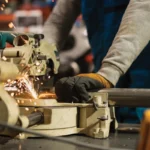
Gravity casting, also known as permanent mold casting, is a metal casting process in which molten metal flows into a reusable metal mold under gravity. The process is commonly used to produce components with consistent dimensions, a good surface finish, and repeatable quality.
Unlike high-pressure die casting, gravity casting does not use high-pressure injection to fill the mold. It can be a suitable manufacturing option for selected aluminum and other non-ferrous metal components used in automotive, industrial machinery, marine, agricultural, and infrastructure applications.
Thank You America LLC (TYA) supports industrial buyers seeking custom cast components and related manufacturing services. Explore our metal casting services to learn more about available casting processes and manufacturing solutions.
What Is Gravity Casting?
Gravity casting is a permanent mold casting process in which molten metal is poured into a reusable metal mold, commonly made from an appropriate tool steel or cast iron. The metal flows into the mold cavity under gravity and solidifies into the required component shape.
Because the mold can be reused, the process can offer economic advantages for repeat production when the tooling investment is justified by the component design and order quantity. Mold design, alloy selection, pouring temperature, and solidification conditions all influence the final component’s quality.
Gravity casting is commonly associated with aluminum alloys and selected copper-based alloys. The suitability of other materials depends on their melting characteristics, mold system, equipment, and production requirements.
How the Gravity Casting Process Works
A typical gravity casting operation includes mold preparation, preheating, metal pouring, solidification, casting removal, and finishing. The exact procedure depends on the casting design and the material being used.
1. Mold Preparation
The metal mold is inspected, cleaned, and prepared for production. Mold cavities are designed to match the required component geometry, while gating and feeding features help control metal flow and compensate for solidification shrinkage. A suitable mold coating or release agent may be applied as required.
2. Mold Preheating
The mold may be preheated to a controlled temperature before pouring. Appropriate preheating can support metal flow, reduce thermal shock, and help maintain consistent process conditions. The required temperature depends on the mold, alloy, and casting design.
3. Molten Metal Pouring
The selected alloy is melted and brought to the specified pouring temperature. Molten metal is then poured into the mold under gravity, filling the cavity through the gating system. Pouring rate and temperature need to be controlled to reduce the risk of incomplete filling, turbulence, and other casting defects.
4. Cooling and Solidification
The metal cools and solidifies within the mold. Heat transfer through the mold influences solidification rate, microstructure, and the potential formation of shrinkage defects. Appropriate mold design and process control help the casting achieve its intended properties.
5. Casting Removal
Once the casting has solidified sufficiently, the mold is opened and the component is removed. The reusable mold is then prepared for another production cycle. Mold life depends on the material, operating temperature, coating, thermal cycling, and maintenance.
6. Finishing and Inspection
Finishing operations depend on the component drawing and quality requirements. They may include:
- Gate and runner removal
- Deburring and surface cleaning
- Shot blasting or other surface finishing
- Heat treatment, where specified
- CNC machining of critical features
- Dimensional and visual inspection
- Material testing or non-destructive testing, where required
The final component is checked against its drawing, material specification, and acceptance criteria before assembly or shipment.
Advantages of Gravity Casting
Good Dimensional Consistency
Reusable metal molds can provide consistent component geometry over repeated production cycles. Actual tolerances depend on the alloy, mold design, casting dimensions, process control, and whether secondary machining is required.
Surface Finish
Gravity casting can produce a smoother as-cast surface than many sand casting applications. The achievable finish depends on the mold surface, coating, alloy, and process conditions.
Potential for Good Mechanical Properties
Controlled mold filling and solidification can produce sound components with useful mechanical properties. Final strength and toughness depend on the alloy, casting quality, heat treatment, and component design.
Reusable Metal Molds
Permanent molds can be used for multiple production cycles. Although initial tooling costs can be higher than disposable mold systems, reuse may reduce the average tooling cost per part over a suitable production run.
Manufacturing Efficiency
For components suited to the process, gravity casting may provide a useful balance between tooling cost, production repeatability, finishing requirements, and output volume. A cost comparison should consider the full manufacturing route rather than casting cost alone.
Defect Control
Appropriate mold design, gating, feeding, metal temperature, and process control can help manage porosity and shrinkage. Gravity casting does not eliminate defects automatically, so inspection and process validation remain important.
Materials Used in Gravity Casting
Gravity casting is commonly used with selected non-ferrous metals and alloys, including:
- Aluminum alloys: Used where low weight, castability, and suitable mechanical properties are important.
- Aluminum bronze: Considered for applications requiring appropriate strength and wear or corrosion performance.
- Brass: Used for selected components where its material properties meet the application requirements.
- Copper alloys: Selected for their relevant mechanical, thermal, or electrical characteristics.
- Zinc alloys: Used where the alloy, component geometry, and process are suitable.
- Magnesium alloys: Considered for lightweight components using compatible equipment and controlled handling practices.
Material suitability must be confirmed for the selected mold, melting and pouring conditions, component geometry, and intended service environment.
Applications of Gravity Casting
Automotive Industry
Gravity casting may be used for selected automotive components where the alloy and casting method meet the required performance specifications. Examples include housings, selected engine components, transmission housings, and other suitable metal parts.
Aerospace Industry
Selected aerospace components may use permanent mold casting where the process, material, qualification, traceability, and inspection requirements are appropriate. Safety-critical parts must satisfy all relevant engineering and regulatory specifications.
Industrial Machinery
Industrial equipment may use gravity-cast components such as suitable pump housings, gear housings, compressor components, hydraulic parts, and valve bodies. Material selection depends on the mechanical loads and operating conditions.
Marine Industry
Selected marine hardware, pump components, and other metal parts may be produced through gravity casting when the chosen alloy provides the required performance in the service environment.
Agricultural Equipment
Gravity-cast metal components may be used in selected tractor assemblies, gear cases, hydraulic housings, and agricultural machinery where the design and material are appropriate.
Gravity Casting vs. Die Casting
Both processes use reusable metal molds, but the way molten metal enters the mold is different. Gravity casting relies on gravity, while conventional high-pressure die casting injects molten metal into the die under pressure.
| Feature | Gravity Casting | High-Pressure Die Casting |
|---|---|---|
| Metal filling | Gravity | High-pressure injection |
| Mold | Reusable metal mold | Reusable precision die |
| Production volume | Often suitable for low-to-high volumes depending on the part | Often attractive for high-volume production |
| Tooling investment | Depends on mold complexity and material | Can be substantial due to the pressure-rated die and machine requirements |
| Component quality | Depends on alloy, mold filling, solidification, and process controls | Depends on alloy, injection parameters, venting, die design, and process controls |
| Typical decision factor | Part design, alloy, quality, and production economics | Part design, cycle time, volume, and dimensional requirements |
Neither process is universally better. The right choice depends on component geometry, material, required properties, volume, tolerances, and total production cost.
Gravity Casting vs. Sand Casting
Gravity casting generally uses a reusable metal mold, whereas sand casting uses a mold formed from prepared sand that is usually broken apart to remove the casting.
| Feature | Gravity Casting | Sand Casting |
|---|---|---|
| Mold type | Reusable metal mold | Generally disposable sand mold |
| Tooling considerations | Higher initial mold investment may be required | Pattern and mold costs depend on the molding system |
| Surface finish | Often smoother, depending on the mold and process | Depends on the sand system and casting conditions |
| Part size and complexity | Limited by mold design and equipment capacity | Can accommodate a broad range of sizes and geometries |
| Production economics | Can be economical for repeat production | Can be economical for prototypes, varied geometries, and selected production volumes |
Technology Advancements in Gravity Casting
Casting Simulation Software
Simulation software can help engineers assess mold filling, heat transfer, solidification, and potential shrinkage or porosity issues before production. Simulation results should be validated against actual manufacturing conditions and inspection findings.
Digital Tool Development
CAD and other digital design tools support mold development and design review. Depending on the tooling system, 3D printing may help create prototypes, patterns, or selected tooling components during product development.
Automated Quality Inspection
Modern inspection processes can include coordinate measuring machines, digital measurement equipment, and non-destructive testing where appropriate. The inspection method should be selected according to the component’s material, drawing, and acceptance requirements.
When Is Gravity Casting a Suitable Choice?
Gravity casting may be worth evaluating when a project requires:
- A component shape compatible with a reusable metal mold
- Repeatable production of similar components
- An alloy suitable for the selected casting process
- Specified dimensional and surface-quality requirements
- A production quantity that justifies the tooling investment
- A clear plan for machining, finishing, and quality inspection
Before finalizing the process, compare tooling investment, production cycle, expected yield, machining requirements, inspection costs, and delivery needs.
Gravity Casting Services by Thank You America LLC
Thank You America LLC (TYA) works with OEMs, industrial manufacturers, and engineering buyers seeking custom metal components and manufacturing solutions. Gravity casting projects should be evaluated against the component design, material specification, production quantity, dimensional tolerances, and required testing.
Depending on the project, manufacturing requirements may include:
- Custom gravity-cast components
- Selected aluminum, bronze, or brass castings
- Prototype and tooling development
- CNC machining and finishing
- Heat treatment where specified
- Dimensional and quality inspection
- Reverse engineering support, where applicable
To discuss a project, prepare your component drawing or 3D model, alloy specification, batch or annual quantity, tolerances, finishing requirements, and inspection criteria.
Visit our metal casting services page to learn more about TYA’s casting capabilities and discuss your project requirements.
Conclusion
Gravity casting is an established permanent mold process for producing suitable metal components with repeatable geometry and a potentially good surface finish. Its use of reusable tooling can be beneficial when the component design, material, production volume, and quality requirements align with the process.
Good results depend on mold design, pouring conditions, solidification control, material selection, finishing, and inspection. Comparing gravity casting with high-pressure die casting and sand casting helps manufacturers select a process that meets both technical and commercial requirements.
Frequently Asked Questions
What is gravity casting?
Gravity casting is a permanent mold casting process in which molten metal enters a reusable mold under gravity and solidifies into the required shape.
Why is gravity casting called permanent mold casting?
It is called permanent mold casting because the mold is made from a reusable material, commonly metal, and is used over multiple production cycles.
What metals are commonly used in gravity casting?
Common materials include selected aluminum alloys, brass, bronze, copper alloys, zinc alloys, and magnesium alloys, depending on equipment and process suitability.
What are the advantages of gravity casting?
Potential advantages include reusable tooling, repeatable dimensions, a good surface finish, and suitable economics for repeated production. Results depend on the design, alloy, and process controls.
What industries use gravity casting?
Applications may include automotive, industrial machinery, marine, agricultural equipment, infrastructure, and other sectors requiring components compatible with the process.
What is the difference between gravity casting and die casting?
Gravity casting fills a mold through gravity, whereas high-pressure die casting injects molten metal into a die under pressure. The appropriate method depends on geometry, alloy, quality requirements, production volume, and cost.
Is gravity casting suitable for aluminum parts?
Yes. Selected aluminum alloys are commonly used in gravity casting. Alloy selection depends on the required mechanical properties, casting design, and operating environment.
Can gravity casting produce complex shapes?
It can produce a range of detailed shapes, provided that the geometry, mold design, and metal flow are compatible with the process. Extremely complex geometries may require another casting method or additional operations.
Does gravity casting require machining?
Some components require little machining, while others need machining to achieve critical dimensions, holes, threads, or specified surface finishes.
How can I enquire about custom gravity casting?
Prepare your drawings, alloy specification, quantities, tolerances, and quality requirements. Visit TYA’s metal casting services page to discuss suitable manufacturing options.